Biography
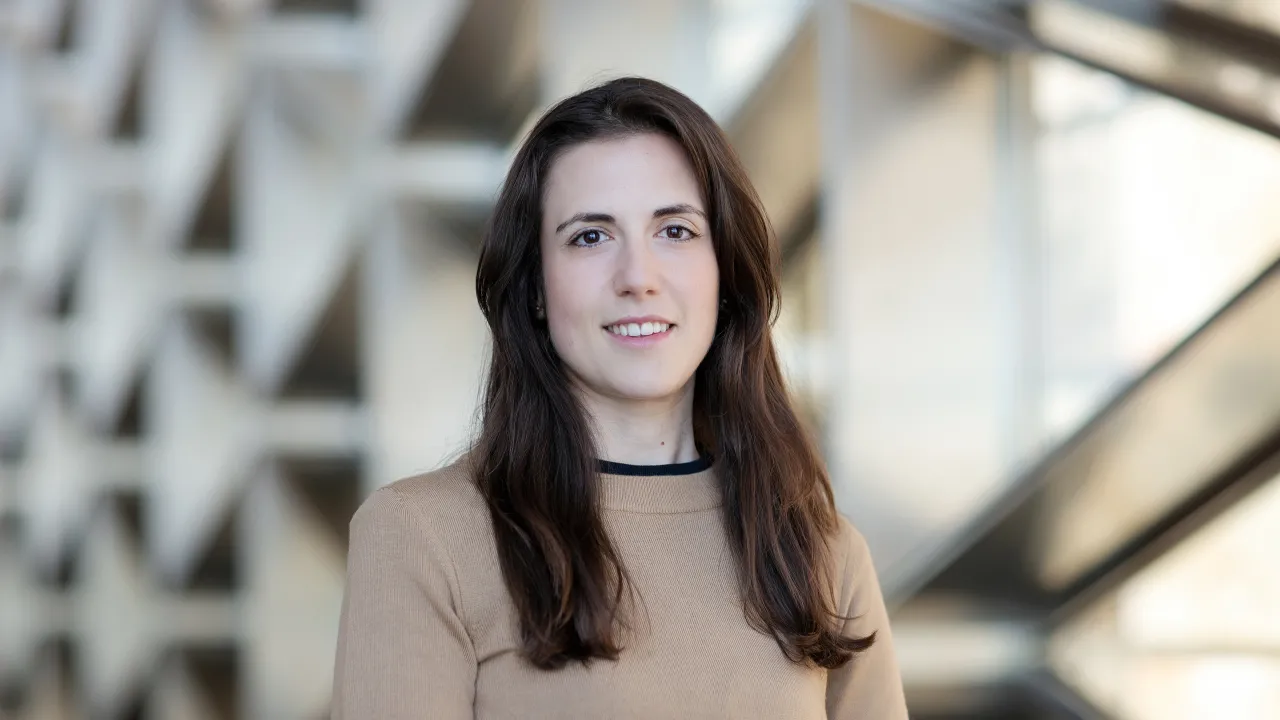
Katerina Nik is an assistant professor of Applied Mathematics and Computational Sciences (AMCS) in the Computer, Electrical and Mathematical Sciences and Engineering (CEMSE) Division at KAUST. Her work focuses on partial differential equations that describe phenomena in biological growth processes, fluid dynamics, and mechanical engineering. She joined KAUST in 2024 after contributing to research at prominent European institutions.
Prior to joining KAUST, Dr. Nik worked as a principal investigator at the Austrian Academy of Sciences, supported by the APART-MINT Fellowship, which enabled her to lead innovative research in applied mathematics. Before this, she was a postdoctoral researcher at the Delft Institute of Applied Mathematics, TU Delft, where she collaborated with Professor Manuel Gnann's group. She also served as a postdoctoral researcher at the Faculty of Mathematics, University of Vienna, Austria, working with Professor Ulisse Stefanelli from 2020 to 2024.
Earlier in her career, she was a research and teaching assistant at Leibniz University Hannover (LUH), Germany, where she completed her doctorate in mathematics. Her academic contributions during this period focused on nonlinear dynamics and the modeling of complex systems.
Expertise and Interests
Professor Nik works on (nonlinear) partial differential equations that describe phenomena in biological growth processes, fluid dynamics, and mechanical engineering. Additionally, she is interested in modeling with differential equations. In order to solve these problems, Nik employs both applied and pure mathematics methods. Her main research topics include:
- Nonlinear evolution equations and operator semigroups
- Free boundary problems
- Calculus of variations
- Geometric measure theory
- Well-posedness and qualitative properties of solutions
- Nonlinear dispersive waves
- Thin fluid film equations
- Microelectromechanical systems (MEMS)
- Biological growth processes, such as volumetric and surface growth
- Brakke's mean curvature flow